
Dr. Paul is an experienced veterinarian who has continually advanced his surgical expertise through extensive hands-on experience and regular participation in continuing education. By attending advanced soft-tissue surgery courses and workshops, he has refined modern techniques and incorporated the latest evidence-based approaches into his clinical practice, allowing him to offer a high standard of surgical care. Following are few of the examples of advanced surgeries being offered and performed at Bridgeview:
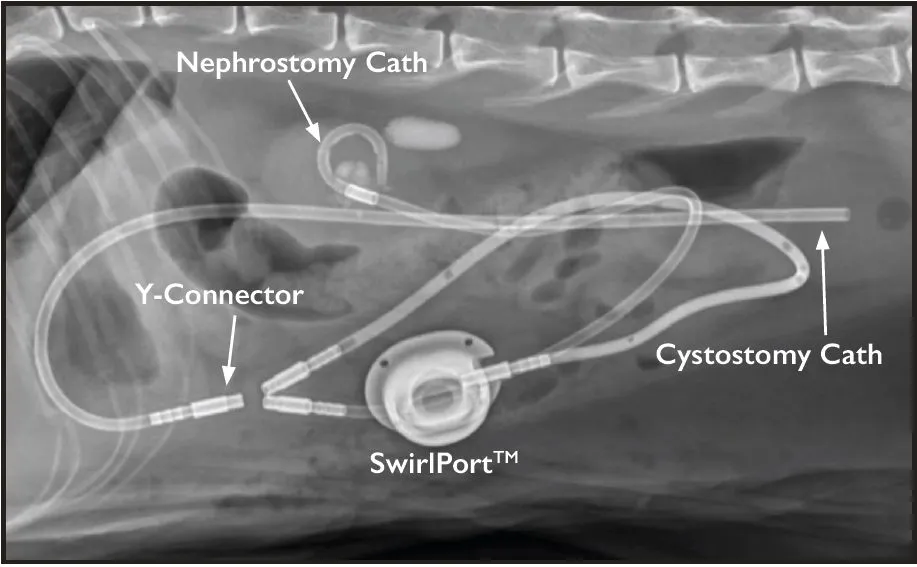
Subcutaneous Ureteral Bypass (SUB) – Ureteral Calculi
A minimally invasive system used to bypass ureteral obstructions caused by stones. SUB devices restore urine flow from the kidney to the bladder and help preserve kidney function in critical cases.
Cystotomy
A surgical opening of the bladder, most commonly performed to remove bladder stones or masses. This procedure allows direct visualization and complete removal of obstructions.
Nephrotomy / Nephrectomy
Nephrotomy involves opening the kidney to remove stones or obstructions, while nephrectomy is the removal of a severely diseased or non-functional kidney. These procedures are reserved for complex renal conditions.
Urethrostomy
A permanent surgical opening is created to allow urine to pass when the urethra is obstructed or damaged. This procedure can be life-saving in patients with recurrent or severe urinary blockages.
Neoureterocystostomy
Reimplantation of ureters into the bladder, typically for ectopic ureters or ureteral trauma
Colposuspension & Urethropexy
Surgical techniques used to treat urinary incontinence by stabilizing the bladder neck and urethra. These procedures help restore normal urinary control in affected patients.
Liver Biopsy & Lobectomy
A liver biopsy allows diagnostic sampling of liver tissue, while a lobectomy involves removal of a diseased liver lobe. These procedures assist in diagnosing and treating complex liver disease.
Adrenalectomy
The surgical removal of one or both adrenal glands, most often performed to treat adrenal tumors. This is a highly specialized procedure requiring careful surgical and anesthetic management.
Cholecystoduodenotomy (CCD)
Cholecystoduodenotomy is a surgical procedure that creates a direct connection between the gallbladder and the duodenum. It is used when the common bile duct is obstructed or cannot be repaired, allowing bile to bypass the blockage and flow normally into the intestine.
Cholecystoenterostomy
A bypass procedure that connects the gallbladder directly to the intestine when normal bile flow is obstructed. It is used in select cases of severe biliary disease.
Cholecystectomy
Complete removal of the gallbladder, typically performed for gallbladder disease, rupture, or obstruction. This surgery eliminates the source of ongoing inflammation or infection.
Common Bile Duct (CBD) Stent Placement
A CBD stent is placed to relieve obstruction of the bile duct caused by stones, inflammation, strictures, or tumors or most commonly in cats with Severe Pancreatitis. The stent restores bile flow from the liver to the intestine, helping reduce jaundice and liver damage, and can be used as a temporary or palliative solution.
Pancreatic Biopsy & Pancreatectomy
Pancreatic biopsy allows tissue diagnosis, while pancreatectomy involves partial removal of the pancreas in severe disease or tumor cases. These advanced procedures require specialized expertise.
Gastric Dilatation–Volvulus (GDV)
Emergency surgery performed to correct stomach torsion and prevent recurrence. Prompt surgical intervention is critical for survival in dogs affected by bloat.
Splenectomy
Removal of the spleen, commonly performed for splenic masses, rupture, or internal bleeding. This procedure is often life-saving in emergency situations.
Enterotomies
Surgical openings into the intestine to remove foreign bodies or obstructions. These procedures restore normal gastrointestinal function and relieve life-threatening blockages.
SubTotal Colectomy
Surgical removal of most of Colon to eliminate the severely chronically dilated megacolon from constipation unresponsive to medical management.